


Your Essential Guide to Furnace Repair and Winter Maintenance: Stay Warm This Winter
As the temperature begins to drop this fall, your home’s heating system turns into the most important equipment in your house. If you rely on a gas furnace, an electric unit, or a heat pump, the transition into the cold months is the true test of your system’s performance.
Unfortunately, many homeowners wait until the first icy night to discover their furnace is failing. By then, local HVAC technicians are overwhelmed with emergencies, and you are left paying costly emergency repair rates. The pre-winter season is the ideal time to get your heating system ready for the cold months ahead. Catching small issues early prevents costly breakdowns when temperatures plummet.
Rheem Furnace Repair Professional in East Texas Pennsylvania
In this in-depth post, we will break down the most common furnace problems, outline a seasonal maintenance checklist, and explain exactly when you need to call a professional for furnace repair.
Top Reasons to Schedule Fall Furnace Maintenance
Preventative HVAC maintenance in the fall is one of the smartest investments a homeowner can make. Preparing your system before winter hits provides several important benefits:
- Reduced Heating Costs: A well-maintained furnace uses a lot less energy. For example, in many homes, duct leaks account for 20–30 percent of heating energy loss.
- Extended Lifespan: A furnace is a major mechanical investment. Routine maintenance and inspections reduce the wear and tear on critical components like the blower motor and heat exchanger, helping your system last longer.
- Improved Indoor Air Quality: Winter means windows are closed and the same air is recirculated for months. Routine cleaning ensures you aren’t breathing in months of accumulated dust, mold, and pet dander.
- Protecting Your Family: Gas furnaces involve controlled combustion. A professional inspection ensures that harmful byproducts like carbon monoxide are safely vented out of your home, protecting your family from invisible dangers.
The Top 7 Most Common Furnace Repairs (And What Causes Them)
Furnace problems are common during the winter months. HVAC technicians see the same recurring issues every single fall and winter. Here are the top seven most frequent furnace problems and how they are solved:
1. Dirty Furnace Filters
Because they are hidden, many homeowners simply forget to change their system’s air filter on a regular basis. A dirty furnace filter is the most common reason for system failures. When air filters become clogged with contaminants, it significantly reduces airflow into the system. This restriction forces your furnace to work twice as hard to push air through the house, leading to system wear and tear, higher energy costs, and even a complete shutdown to prevent overheating.
- The Solution: Check your filter every month and replace it when it looks dirty, typically every 1-3 months. Homes with pets, allergy sufferers, or high dust levels often need more frequent changes.
2. Short Cycling
Short cycling occurs when your furnace turns on and off too frequently without fully heating your home. This is a highly inefficient operating mode that causes severe strain on your system. Short cycling is typically caused by clogged air filters, malfunctioning thermostats, or having an oversized furnace that heats the space too quickly.
- How to Fix It: Start by checking the filter and replacing it if it is clogged. If that doesn’t solve the issue, an HVAC technician can diagnose if a safety switch is tripping or if the unit is improperly sized for your ductwork.
3. Broken Thermostats
Often, the furnace is fine, but the problem lies with the thermostat that’s controlling it. A faulty thermostat can make a perfectly healthy furnace perform poorly. Dirty sensors, loose wires, or dead batteries are all potential causes of a malfunctioning thermostat that can cause your furnace to work intermittently or not at all.
- How to Fix It: Make sure the thermostat is set to HEAT and increase the temperature a couple of degrees. If the screen is blank, replace the batteries. If discrepancies in your home’s temperature continue, upgrading to a smart thermostat can improve comfort and lead to significant energy savings.
Rheem Furnace Repair Professional in East Texas Pennsylvania 18046
4. Ignition Failures
Older furnaces with a pilot light or newer models with an electrical ignition both rely on these components to start the heating cycle. If your furnace isn’t heating properly, one of these parts may be failing due to wear and tear, dirt buildup, a clogged gas line, or a dirty flame sensor. A dirty flame sensor will frequently cause the furnace to shut down entirely for safety reasons.
- The Fix: Because this involves gas lines and combustion, this requires a professional HVAC technician to safely clean the sensor or replace the ignition system.
5. Cracked Heat Exchangers
A cracked heat exchanger is one of the most serious furnace problems because it can leak carbon monoxide. This gas is colorless, odorless, and can be fatal if inhaled in high concentrations. Signs of a cracked furnace heat exchanger include a yellow or flickering pilot light, unusual smells, and soot around the furnace burners.
- The Fix: Turn off your furnace immediately and call a qualified HVAC professional. If the furnace is older, this repair is usually a sign that it is time to replace the entire unit for long-term efficiency and safety.
6. Blower Motor Failures
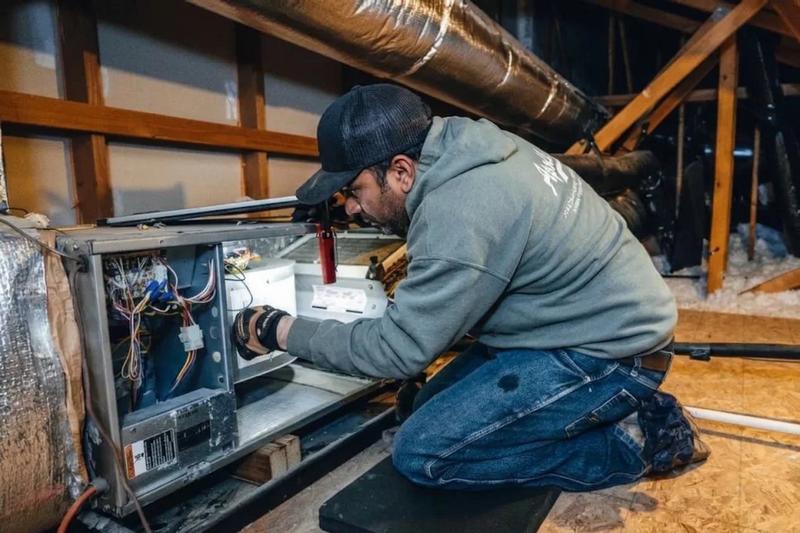
The blower motor is the component responsible for pushing warm air into your home. When it fails, airflow may be weak or stop completely. Furnaces that are working properly are relatively quiet. If you hear strange noises such as rattling, banging, grinding, or squealing, a mechanical issue with the blower motor or a broken belt could be the culprit.
- The Solution: Leave loud furnace noises to a professional HVAC technician to prevent further damage to the motor or fan housing.
7. Duct Leaks and Blocked Vents
Leaky ductwork allows warm air to escape before it reaches your rooms, while blocked vents restrict the flow of heat entirely. Both issues cause uneven heating, cold spots, and higher utility bills.
- The Solution: Inspect accessible ducts for gaps, disconnected sections, or damaged insulation. Ensure that vents are unobstructed by furniture, curtains, or rugs. Sealing and insulating ducts improve comfort and help every room heat more evenly.
DIY Furnace Maintenance Tips
While certain mechanical repairs require a licensed professional, there are several steps you can take as a homeowner to prepare your HVAC system for winter. Follow this checklist every November to ensure maximum efficiency:
- Buy Extra Filters: Purchase extra furnace filters to last through the heating season so you aren’t caught off guard.
- Clean Around the Unit: Clean around the furnace to remove any dust, dirt, or clutter. Your furnace needs proper airflow to operate safely and efficiently.
- Turn It On Before Winter: Turn on your heating system early in the season to ensure it’s operating properly. Listen for unusual noises and check for any unpleasant odors. Don’t wait for the first freezing night.
- Test Your Carbon Monoxide Detectors: Ensure your carbon monoxide detectors are functioning properly by replacing the batteries and testing the alarms. Replace any detectors that are older than seven years.
- Check the Burner Flames: If you have a gas furnace, the flames should be blue and steady. Yellow or flickering flames may indicate a serious issue that requires professional attention.
- Seal Drafts: Check windows and doors for drafts and seal them with weatherstripping or caulk. Use heavy curtains to keep warm air inside during the night.
Knowing When to Call for Furnace Repair
DIY maintenance goes a long way, but it is not a substitute for professional care. A basic furnace inspection or tune-up usually costs between $80 and $200, which includes checking vital components like the burner, blower motor, and thermostat.
During a professional tune-up, an HVAC expert will test for proper airflow, clean internal components, verify that the system is operating safely, and test the heat exchanger for structural integrity. Annual professional maintenance ensures your system operates efficiently and helps catch hidden damage early.
Common Questions About Heating Maintenance
When should I change my HVAC filter? A good rule of thumb is to replace your furnace filter every 1-3 months. If you have pets, live in a dusty area, or suffer from allergies, you may need to replace it every 30 days.
What causes a furnace to blow cold air? If your furnace is blowing cold air, a dirty air filter or incorrect thermostat setting is often the cause. It can also happen if the ignition system has failed or if a safety switch has shut the heating burners down to prevent overheating.
What is the leading cause of furnace failure? The most common issue is a dirty furnace filter, which restricts airflow and causes the system to overheat and short cycle. Other highly frequent problems include thermostat malfunctions and ignition failures.
Which furnace parts break down the most? Filters, pilot lights, and thermostats are often the first parts to fail. Regular annual maintenance helps prevent early breakdowns of these key components.
For a Rheem Furnace Repair Professional in East Texas 18046, you can count on Lehigh Valley Plumbing Experts. We’re available 24/7 for all your Rheem Furnace Repair Professional needs: (484) 222-4038

Leave A Comment