


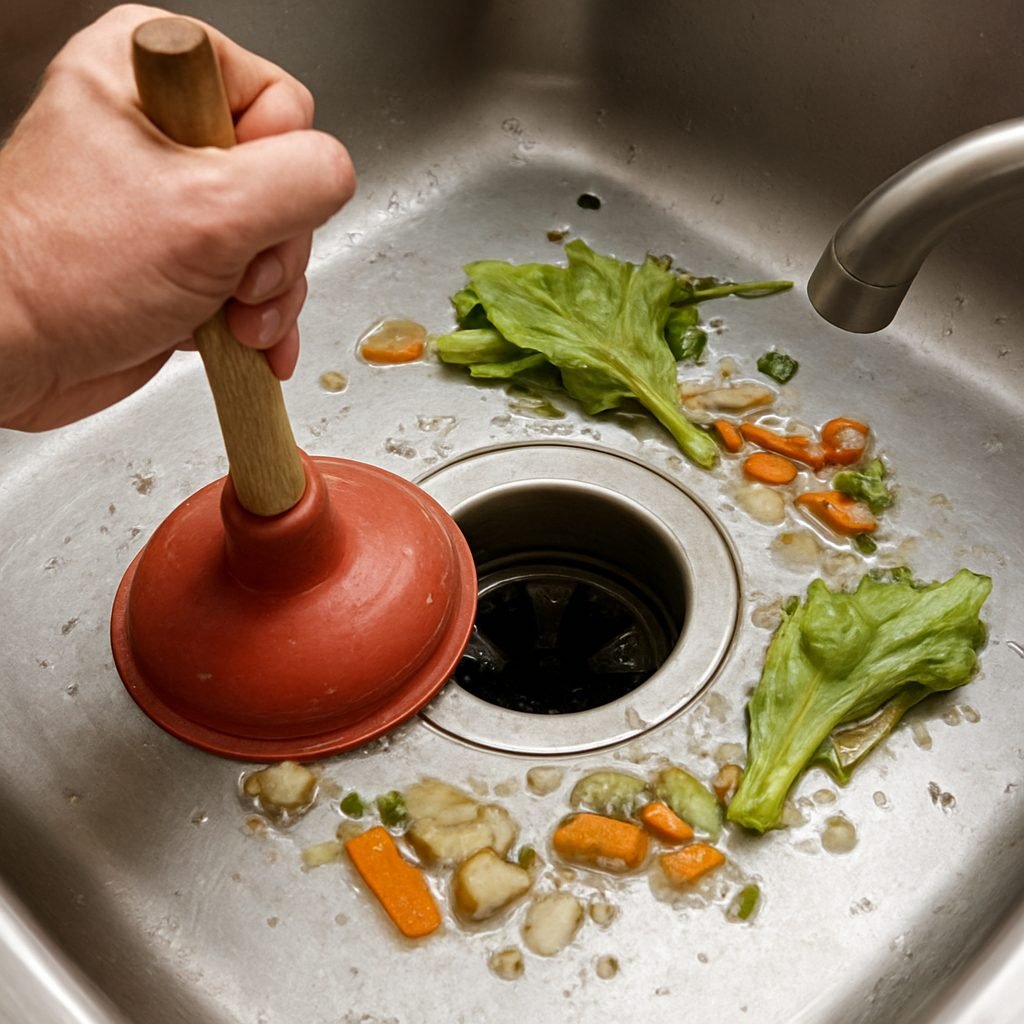
Garbage Disposal Jammed, Humming, or Dead? Here’s What’s Really Going On (And What to Do Next)
When your kitchen disposal jams, hums, or won’t run, the urge is to panic. In many cases the culprit is garbage disposal blades stuck—often from overfeeding or a stray object—and the right move is a calm, safe diagnostic, not a risky hack. This guide walks Lehigh Valley homeowners through a practical framework to diagnose the issue, distinguish blade jams from motor problems or leaks, and decide whether to DIY or call Lehigh Valley Plumbing Experts for a trusted local repair.
1. Understand the symptoms and likely causes
A jammed garbage disposal blades stuck is the most common reason a unit hums and won't grind. When you hear the motor struggling without turning the impeller, the problem is almost always mechanical—not an electrical fault in most cases.
In practical terms, you will see three distinct symptoms: a true jam where the blades stop and the motor hums; a unit that runs but makes no grinding noise (overload); or a dead unit that won’t respond at all. Understanding which of these you’re facing points you toward the right fix.
- Jammed object stuck in the grinding chamber.
- Overfeeding or feeding large volumes of fibrous material at once.
- Fibrous materials like celery, corn husks, or banana peels that wrap around the impeller.
- Worn impeller bearings or a seized motor from age or heavy use.
- Overloaded motor from continuous hard use without a pause.
A quick diagnostic approach without taking the unit apart helps separate blade jams from motor issues: look for obvious obstructions, listen to how the motor sounds when you try to grind, and note any burning smell or water leakage around the unit. For a detailed step-by-step, see BobVila guide.
Concrete example: a homeowner in Allentown overfilled the disposal with a mound of celery and fruit rinds. The unit hummed loudly but would not spin, and the jam was clearly contained in the grinding chamber. After unplugging and inserting the hex key, they freed the impeller and flushed with water—only to find the unit still struggled on the next use, signaling a likely blade obstruction or wear issue.
Practically, a humming disposal that won’t resume grinding usually signals a jam or an overloaded motor rather than a simple reset. If you can rotate the impeller with a hex key and the unit runs, you’ve isolated a mechanical obstruction rather than a dead switch. If the jam persists or you smell burning, stop and call Lehigh Valley Plumbing Experts to inspect and repair or replace as needed. Learn more at our service page: garbage disposal repair and installation.
Takeaway: clearly distinguish whether the issue is a blade obstruction or motor problem early—this choice drives whether you DIY the unjam or call a pro for a safe, code-compliant repair.
2. Safety first before you touch anything
Safety first. If you see a jammed unit, you cannot rush in. The risk of electric shock or a spinning impeller makes this a hands-off situation until power is removed. When you suspect garbage disposal blades stuck, shut it down before you touch anything. Cut power completely: flip the wall switch, and if possible, switch off the corresponding circuit breaker. If your disposal sits on a plug-in outlet under the sink, unplug it. In some homes the outlet remains energized even when the switch is off, so a breaker kill ensures no current is available. Place a bucket and a pair of long-handled tongs within reach, and never put hands in the grinding chamber for any reason. If the unit sits near a water source, shut off the cold water supply to minimize a spill, and keep kids and pets away during troubleshooting. These steps are non-negotiable because electricity and water together are a high-risk combination, and a sudden restart can fling debris or cause a short. Example from a recent job in Allentown: a metal spoon wedged in the grinding chamber was retrieved with tongs after power-down, avoiding injury and a potential short.
- Power down the unit at the wall switch, and, if accessible, unplug the unit or switch off the circuit breaker to ensure no power remains.
- Place a bucket and long-handled tongs within reach; never put hands in the grinding chamber.
- If water is around the trap, shut off the cold water supply to minimize spills and keep kids and pets away during troubleshooting.
- If you smell burning, hear buzzing, or feel unsure about the wiring, stop and call a professional.
- If you cannot confirm de-energization safely, pause and contact Lehigh Valley Plumbing Experts for a professional assessment: Lehigh Valley Plumbing Experts.
If you’re not confident after isolating power, do not proceed. For many kitchens in Allentown, Bethlehem, and Easton, a plug-under-sink outlet may still carry current even when the switch is off, so a breaker kill is the safer default. You can arrange a safe assessment with Lehigh Valley Plumbing Experts if there’s any doubt about the wiring or the unit's condition. Takeaway: safety first means pausing rather than guessing when you’re unsure about energy sources.
3. How to unjam a jammed disposal
When a disposal is jammed, the quickest win is to free the impeller without disassembly. If garbage disposal blades stuck, start by confirming the problem is a blade obstruction rather than a seized motor, and keep safety first as you proceed.
- Remove visible obstructions with tongs or pliers; never reach into the grinding chamber.
- Insert a 1/4 inch hex key into the bottom socket and rotate the impeller back and forth to free the jam. Models such as InSinkErator Evolution and Waste King Legend commonly provide this access.
- After the jam releases, run cold water and briefly power the unit to test operation; stop if you hear grinding noises or smell burning.
This approach works best when the blockage is a small object or overfeeding jam rather than a seized motor. If the impeller remains stubborn after several 10–20 second rotations, the problem may be more serious than a simple jam.
Limitations and trade-offs: The hex key method works best when the jam is caused by a single obstruction and the bottom socket is intact. If the bottom socket is damaged, or the impeller is worn, forcing it can strip threads, crack housing, or trip the overload protector. For older units, the cost of repeated DIY fixes often eclipses replacement.
Real-world example: A homeowner in Allentown freed a jam by inserting the hex key and rotating the blades for about 15 seconds. The disposal then ran normally when tested with cold water, avoiding a costly replacement. If you’re unsure, you can reference practical guides like BobVila's and manufacturer notes for model-specific tips.
Model-specific nuance: For InSinkErator and Waste King, the bottom socket sits in a reinforced ring. Some units respond to a subtle back-and-forth wiggle, while others require a short 90-degree turn to disengage a stubborn jam. If the socket feels loose or resistant beyond a gentle rotation, stop and seek professional guidance.
Note: If the bottom hex socket is stripped, or you feel uneven resistance, do not force it. Pushing past that point risks damaging the motor seal or burning out the overload protector.
If unresolved after a careful hex-key attempt, or if you notice burning smells, excessive vibration, or leaks, arrange a service visit with Lehigh Valley Plumbing Experts at your earliest convenience: garbage disposal repair service.
4. If it hums but will not spin
When a garbage disposal hums but will not spin, the issue is almost always a blade obstruction or an overloaded motor. The hum means the motor draws current but the impeller can't turn, so the blades are effectively stuck and nothing grinds. This is exactly the scenario where you should focus on safe, targeted fixes first rather than guessing at internal components.
If your model provides a bottom reset and a hex access socket, you can attempt a safe reset and manual rotation before disassembling further. This approach preserves parts and minimizes downtime when a simple jam is the culprit.
- Reset and test: If a bottom reset is present, press it and hold for a few seconds, then restore power and run cold water while attempting a light spin with a 1/4 inch hex key in the bottom socket.
- Manual rotation: Insert a 1/4 inch hex key into the bottom socket and rotate the impeller back and forth to free the jam. Do this with the water running and hands away from the chamber.
- Validate operation: After freeing, run cold water and briefly power the unit to see if it spins smoothly. Stop if you hear grinding or smell burning.
If the unit still refuses to spin after these steps, the motor may be seized or the overload protector tripped. In that case, schedule service with Lehigh Valley Plumbing Experts; they will diagnose whether it is a jam that remains after manual rotation or a motor failure that requires replacement.
Real-world example: a Bethlehem kitchen with an 8-year-old InSinkErator Evolution hummed and would not spin. The homeowner followed the steps above, freed a small obstruction with the bottom hex key, and the disposal ran again for several months without issue. In another case, a Waste King Legend presented the same symptom and needed professional disassembly to inspect bearings after repeated jams.
Trade-off: this method minimizes downtime and repair costs when a simple jam is present, but repeated jams or an aging unit (often 10–12 years) can make replacement the wiser long-term choice. For a professional assessment and options, see our service page: garbage disposal repair and installation service. External guidance on unjamming and maintenance is also useful: Bob Vila article and This Old House.
If the jam persists or you smell burning, treat it as a signal to stop and call Lehigh Valley Plumbing Experts for service. A licensed plumber can confirm jam versus motor failure and quote repairs or replacement without guessing.
5. Repair or replace: making a smart decision
When your garbage disposal blades stuck and jams keep piling up, the decision to repair or replace hinges on cost, reliability, and how soon you need a dependable solution. This framework cuts through guesswork and anchors your choice in real-world economics and service realities in the Lehigh Valley.
A practical decision framework
Think in terms of three axes: age and condition, cumulative repair cost, and downtime impact. If the unit is older and you’ve already endured several fixes, replacement becomes pragmatic. If the next repair would push total spend into a sizable fraction of a new unit’s installed price, replacement usually wins. Finally, factor in how quickly you need reliable operation and whether a newer model would bring meaningful efficiency or quieter operation.
- Age and reliability: disposals typically last 10–15 years; after roughly 8–12 years with repeated jams, replacement is a sensible bet.
- Repair cost versus new unit price: if a single repair estimate approaches half the price of a new unit plus installation, replacement is worth serious consideration.
- Downtime and installation friction: replacement may involve cabinet access, new mounting hardware, and possible plumbing adjustments; plan for a window of downtime.
- Warranty and brand support: ensure you’re choosing a model with a solid warranty and local service support, which reduces risk if problems recur.
Here are two concrete scenarios that show how the framework plays out in practice.
Example A: A 7-year-old InSinkErator experiences intermittent jams. A single repair might fix the symptom, but bearing wear can sneak up again. If the quote to repair is around a third of a new unit plus installation, you’re paying for a risk rather than a guarantee of long-term reliability.
Example B: A 12-year-old unit leaks from the seal and clogs frequently. A repair would likely require multiple parts over the next few years with mounting labor. Upgrading to a newer, more efficient model installed by a local pro reduces downtime and gives you a clear warranty path, which often lowers total cost of ownership.
Key takeaway: treat each failure as a total-cost decision, not a single fix.
What you should expect from a professional visit: a precise diagnosis, a transparent comparison of repair versus replacement, and a clear path forward with local options to upgrade. For common brands like InSinkErator and Waste King, working with a local plumber in the Lehigh Valley keeps parts availability and scheduling predictable.
If you’re leaning toward replacement, start with a local pro who can quote installation, old-unit removal, and any piping checks. In Allentown, Bethlehem, and Easton, Lehigh Valley Plumbing Experts provide licensed installation with a straightforward warranty mindset. A no-surprise assessment now can save you downtime and unexpected costs later.
6. Maintenance and prevention to reduce future jams
Maintenance is not glamorous, but it is where you win the most. When you keep a garbage disposal in good operating condition, you markedly reduce the odds of a jam turning into a full blown failure. In practical terms, careful maintenance lowers the chance that you end up with garbage disposal blades stuck moments during busy weeknights. Guidance from established home sources aligns with this approach, emphasizing cautious use and regular flushing, such as the advice found in Bob Vila and This Old House.
- Run cold water during grinding and for several seconds after to carry debris away
- Feed small portions instead of dumping a large load at once
- Avoid fibrous or hard materials like celery, corn husks, and shells that tend to wrap around the impeller
- Occasionally clean with ice or citrus peels to scrub the chamber and curb odors
- Schedule a professional checkup if the unit is older than about 10 years or has a history of jams
- Avoid chemical drain cleaners; they can damage seals and fixtures and don’t fix jams
Concrete example: a busy family kitchen saw frequent jams after celery and corn husks slipped past the sink strainer. After adding small feed portions, a quarterly ice cleaning, and keeping water running, jams dropped dramatically over two months.
Maintenance has real limits. It slows wear on bearings and seals, but it cannot reverse a seized motor or replace worn components. If the unit is aging or you’re chasing repairs that recur, a smarter choice is to plan for replacement rather than chasing incremental fixes.
If you want a local pro to audit and refresh your kitchen waste disposer, book a service with Lehigh Valley Plumbing Experts. They serve Allentown, Bethlehem and Easton and can tell you whether a repair or replacement is the right move for your situation. Next step: schedule a maintenance check today.

Leave A Comment