


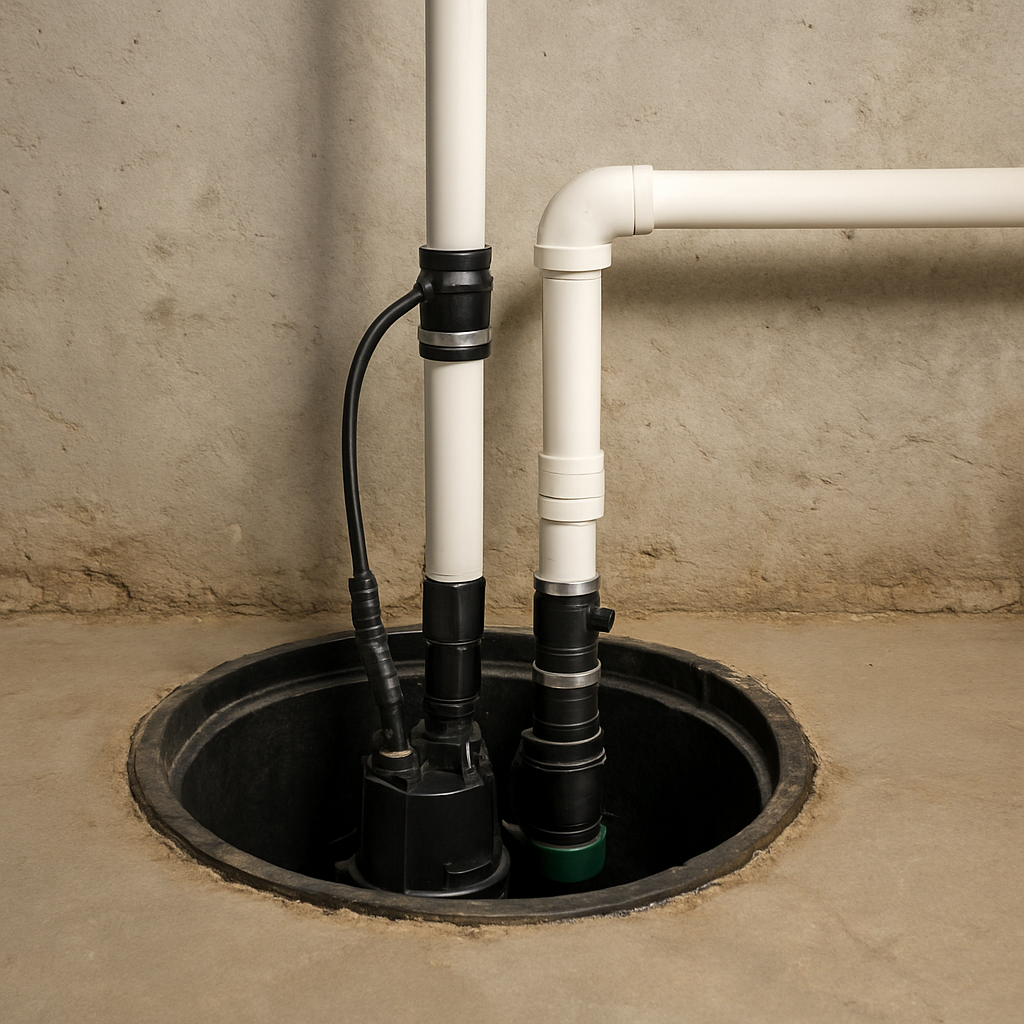
Sump Pump Buying & Maintenance Guide: Choose the Right System for Your Lehigh Valley Home
If your Lehigh Valley basement has ever leaked or stayed damp after heavy rain or snowmelt, a reliable sump pump is the single most effective defense against costly water damage. This guide shows how to evaluate your risk, pick the right pump type and size, choose backup options, and handle practical installation details like discharge routing and freeze protection for our local climate. You will also get a short maintenance checklist, realistic cost ranges, and clear indicators for when to call a professional so you can stop guessing and start protecting your basement.
Assessing Basement Flood Risk in Lehigh Valley
Reality check: many Lehigh Valley basements are at higher flood risk than homeowners expect because seasonal snowmelt, clay soils, and poor lot drainage combine with heavy spring storms to overwhelm ordinary water drainage systems. Assessing risk is not about guessing whether youll get wet once every five years; it is about identifying how often water gets to the foundation, how fast it enters, and what the consequences will be if the pump fails.
Five-point on-site assessment
- Visual history: Look for past signs of water: efflorescence on walls, paint peeling, staining at the cove joint, or old water lines. These tell you whether the issue is seasonal or chronic.
- Basement use and value: Finished living space, mechanical equipment, or stored irreplaceables raise the cost of failure and justify redundancy like a backup sump pump or alarm.
- Surface drainage and downspouts: Verify downspouts discharge at least 6 feet from foundation or into proper storm drains. Poor grading or blocked drains is the most common correctable cause.
- Existing sump pit and condition: Note pit depth, whether there is a sump pit at all, float clearance, and if the current pump cycles frequently. Shallow pits and constant cycling increase wear dramatically.
- Site hydrology and municipal factors: High groundwater, nearby creeks, or known stormwater backups in your neighborhood change duty cycle expectations. Check local notes at Lehigh County or call your township for recent stormwater advisories.
Practical tradeoff: a conservative assessment errs toward redundancy. Upsizing or adding a backup costs more up front but prevents expensive water damage and mold remediation. The tradeoff is not aesthetic; it is a financial decision about acceptable risk under heavy storms and power outages.
Concrete Example: A Bethlehem home with a finished rec room and history of seepage behind the cove joint showed frequent pump cycling after heavy spring rains. The right response was replacing the undersized pedestal unit with a high capacity submersible, adding a battery backup, and rerouting a clogged downspout away from the foundation. The homeowner avoided a second flood the next season.
Hard judgment most homeowners miss: measuring isolated wet spots is not the same as estimating inflow rate. If water reaches the foundation during typical heavy rain, assume high duty cycle and plan for either a higher flow pump or dual pumps. DIY inspections are useful, but correct discharge routing, check valve placement, and permit triggers are practical reasons to bring in a licensed plumber for a site evaluation.
Sump Pump Components and How They Work
Core point: a sump pump is a simple system of parts that fail for predictable reasons. Understanding the basin, pump motor, float or sensor, check valve, discharge piping, and alarms lets you focus maintenance where it matters and avoid expensive surprises during heavy storms or power loss.
Primary components and the failure modes that matter
- Sump pit / basin: the collection point for groundwater and drain tile. Shallow or cluttered pits increase cycling and sediment exposure.
- Pump motor (submersible or pedestal): submersible pumps sit in the pit for quiet, space-saving operation; pedestal motors stay above the pit for easier service but are louder and visually intrusive.
- Float or sensor: vertical floats, tethered floats, and electronic level sensors trigger the motor. Mechanical floats fail when they snag debris; electronic sensors fail when coated or if not rated for dirty pits.
- Check valve: prevents discharged water from re-entering the pit. A stuck or absent check valve causes repeated cycling and shortens motor life.
- Discharge piping and fittings: rigid routing with proper slope keeps water moving. Improvised flexible hoses or poor joints freeze or leak in winter.
- Alarm and monitoring: simple audible alarms or a smart sump pump monitor that texts you are low-cost ways to spot failure before water reaches valuables.
Practical tradeoff: choose a submersible pump for finished basements where quiet and concealment matter, but accept slightly higher repair complexity. Pick a pedestal pump if you want quick DIY access and expect frequent servicing; it will be noisier and less discreet.
Float types—real world judgment: vertical floats are the most reliable in sediment-prone pits because they move in a straight line and are less likely to wedge. Tethered floats are cheaper and work fine in clean pits, but they can ride up on debris or get hung on the pit lip. Electronic sensors eliminate moving parts but must be kept clean and are more sensitive to mineral-laden water common in some Lehigh Valley soils.
What actually causes most emergency failures: in my experience, the single most common root causes are a stuck float, clogged inlet, or a failed check valve—not an immediate motor burnout. That means targeted upkeep and a good alarm often prevent catastrophic water damage more effectively than buying the biggest pump available.
Concrete Example: A homeowner in Allentown had repeat short cycles and premature motor failures. The technician found a tethered float snagging on debris and a partially blocked inlet screen. Replacing the tethered float with a vertical float, clearing the inlet, and adding a basic alarm stopped the cycling and doubled the pump's effective service life.
Key lesson: maintain the pit and the float mechanism first. A modest pump with a clean pit and working check valve outperforms a larger pump that cycles constantly.
Next consideration: after you confirm components are intact, the following step is matching pump capacity to calculated head and inflow rates; this determines whether a single high capacity pump, dual pumps, or a backup sump pump is the right choice for your Lehigh Valley basement.
Choosing Between Submersible and Pedestal Pumps with Example Models
Direct choice: pick the pump that fits the pit and the job, not the one with the biggest horsepower. Submersible units sit in the sump pit and trade easier concealment and quieter operation for more complex service access. Pedestal pumps keep the motor above the pit, which makes servicing quick and cheap, but they take more room, are louder, and look like utility equipment.
Real trade-offs that change decisions on real homes
Practical insight: if your basement is finished and the pump will be in living space, a submersible is the usual choice because it reduces noise and visual impact. If the pit is very shallow or hidden under a furnace platform, a shallow-pit or pedestal-style pump may be the only practical option. Also note that sediment and grit common in some Lehigh Valley properties foul some submersible impellers faster; that argues either for a robust model with replaceable wear rings or for a pedestal in extremely dirty pits.
| Model | Type | Strength / Why it matters | Typical Lehigh Valley use case |
|---|---|---|---|
| Zoeller M53 Mighty-Mate | Submersible | Cast-iron body, reliable simple float switch | Finished basements where quiet operation and durability matter |
| Liberty Pumps 257 series | Submersible | Higher-capacity options and multiple horsepower choices | Homes with high duty cycle or faster inflow rates after heavy storms |
| Wayne CDU series | Submersible | Budget-friendly with decent flow ratings | Older homes needing economical replacement units |
| Little Giant shallow-pit / utility models | Pedestal / shallow-pit | Designed for very shallow pits or crawl spaces | Mechanical rooms or crawl space sump pits with limited depth |
Limitation to accept: submersible pumps are not invulnerable to grit and silt. If your perimeter drain brings in sand or heavy sediment you either need more frequent maintenance or a pump model specified for abrasive conditions. Buying a more powerful motor does not solve sediment problems and may only increase wear and electrical cost.
Concrete Example: an Easton homeowner had a 10-inch-deep pit under a utility platform. A standard submersible would not fit. The tech installed a Little Giant shallow-pit unit and added a Basement Watchdog battery backup. The pedestal-style arrangement made future servicing fast, and the backup handled a storm-related outage that would otherwise have flooded stored belongings.
Most Lehigh Valley homeowners are best served by a modern submersible with a vertical float unless pit depth, access, or very dirty inflow forces a pedestal or shallow-pit solution.
Next consideration: choose the pump type that fits the pit and inflow characteristics, then move directly to capacity and head calculations; mismatching type to site creates maintenance headaches or short service life no amount of horsepower will hide.
Sizing a Sump Pump: Head, Flow, and Practical Calculation Steps
Start with the head, not horsepower. The single most common mistake is shopping by horsepower and brand instead of matching pump performance to the real-world vertical lift and flow rate your site requires. A 1/3 HP pump that can move the necessary gallons per minute at your calculated head is worth far more than a larger motor that chokes under lift.
Three practical field steps to size a pump
- Measure static vertical lift: Measure from the typical waterline in the sump pit to the highest point the discharge line reaches before it exits (top of standpipe, street curb, or roof vent). This is vertical head and is non-negotiable.
- Convert horizontal run and fittings into head loss: Use a conservative allowance of 1 foot of head per 10 feet of horizontal pipe plus 2 to 4 feet per 90-degree elbow for a quick site estimate. This is approximate; for longer runs or multiple fittings consult manufacturer friction charts or a plumber.
- Estimate required flow (GPM) with a simple field test: Pour a known volume (for example, a 5-gallon bucket) into the pit and time how long the pump takes to remove it. Repeat and average to get a real-world gallons-per-minute number your pump must meet at the calculated head.
Practical insight: Friction losses matter more than most homeowners expect. Long runs to an uphill street curb or multiple elbows can halve a pump's effective flow. That forces you to read pump curves — not just the horsepower label — and pick a pump whose curve shows the required GPM at your total dynamic head.
When to add margin or redundancy. If your basement is finished, contains irreplaceable items, or the pit sees heavy, rapid inflow during storms, specify a pump that meets your measured GPM at the calculated head plus 20–30 percent capacity. For very high duty cycles or when power outages are likely, plan on a second pump or a backup sump pump with independent power.
Concrete Example: A homeowner in Allentown measured an 8-foot vertical lift to a curb discharge and a 30-foot horizontal run with two elbows. Using the rule-of-thumb, the installer added 3 feet for horizontal loss and 4 feet for fittings, giving a total dynamic head of 15 feet. The field bucket test showed the pit needed roughly 30 GPM under normal conditions, so the tech selected a pump whose curve delivered 30+ GPM at 15 ft and added a battery backup sized for at least two hours of runtime under that load.
Limitation and tradeoff: Conservative allowances (1 ft per 10 ft) are safe for quick estimates but can under- or over-state true losses for different pipe diameters and materials. Oversizing reduces risk but increases cost, energy use, and potential for rapid cycling if the pit is small. The right move is to size to the calculated head and actual inflow, then confirm on the pump curve rather than guessing with horsepower alone.
Use a bucket test to determine actual GPM and pair that with calculated total dynamic head; then pick a pump whose performance curve meets or exceeds that operating point.
Backup Options: Battery Backup, Water Powered Backup, and Alarm Systems
Bottom line: a primary sump pump without a dependable backup is a single point of catastrophic failure during storms that knock out power or overwhelm the pump. Choose a backup strategy based on how long outages last in your neighborhood, whether you have municipal water, and how costly a flood would be for your finished basement or mechanicals.
Battery backups: real-world tradeoffs and sizing
What they are: battery backup systems range from integrated battery-powered pumps to add-on battery modules that run your existing pump. Common battery types are flooded lead-acid, AGM, and increasingly lithium. Each has a different cost, weight, maintenance need, and expected replacement interval.
Tradeoff to accept: AGM batteries cost more than flooded lead-acid but require zero maintenance and lower corrosion risk; lithium gives the best runtime-to-weight and longest life but is significantly pricier. For most Lehigh Valley homes a well-sized AGM backup gives the best balance of reliability and cost.
Sizing rule of thumb: size battery runtime to the actual gallons per minute your pump uses at your site head (use the bucket test and pump curve from the Sizing section). Then calculate amp draw and choose a battery or battery bank that delivers the needed amps for the desired hours. If you want two hours of runtime under storm conditions, plan battery amp-hours accordingly and add ~20 percent margin for battery aging.
- Practical note: a backup pump that is too small will run continuously and still allow flooding; size matters more than brand alone.
- Maintenance: test monthly, replace batteries every 3–5 years (AGM) or per manufacturer guidance, and keep charging circuitry inspected.
- Installation tip: install the backup control box and battery outside the pit where possible and ensure safe wiring and ventilation if using flooded batteries.
Water-powered backups — limitations that matter
How they work: these systems use municipal water pressure to create suction and eject sump water. They are attractive because they avoid batteries, but they are not a universal solution.
Key limitations: they consume large volumes of potable water (expect hundreds of gallons during a single event), rely on steady municipal pressure (they fail with low pressure or well systems), and often deliver lower lift and flow than electric pumps. Many municipalities restrict or forbid their use because of water waste or cross-connection concerns — check with your township or Lehigh County before planning one.
Real-world judgment: use a water-powered unit only as a last-resort backup where code allows and municipal supply is reliable; do not rely on it alone for finished basements or high-inflow scenarios.
Alarms and smart monitoring — low cost, high value
Alarm systems are not backups, they are early warning. A loud pit alarm or a smart monitor that texts you reduces damage by giving you time to respond. Pair alarms with remote notification if you travel or if the basement houses sensitive equipment.
Practical combination: the best practical setup for most Lehigh Valley homes is a quality submersible sump pump + an AGM battery backup sized for 2+ hours at expected load + an audible alarm and smart notification. That combination covers power outages, pump failures, and gives remote notice so you can act before valuables are lost.
Real-world example: A homeowner in Bethlehem installed a Basement Watchdog-style battery backup and a smart monitor tied to cellular alerts after a prior flood. During a late-spring thunderstorm a power outage disabled the primary pump; the backup ran for three hours and the owner received a text alert, allowing a neighbor to start a shop vacuum and keep water away from finished flooring until power returned.
Important: check municipal rules before installing water-powered backups and size battery backups to your measured GPM at the calculated head — guessing on runtime is how floods happen despite a backup.
Installation Considerations, Local Codes, and Freeze Protection
Direct point: improper discharge routing and lack of winter protection are the two installation failures that cause the most preventable pump breakdowns and basement floods in Lehigh Valley. Get the exit path and winter-proofing right during installation; fixing them after a flood is expensive and disruptive.
Site decisions that matter on day one
Where the pipe leaves the house: route the discharge to daylight away from the foundation and neighbors, not into a crawl space, window well, or a sanitary sewer. Discharging to a sewer line is typically prohibited and risks fines and backflow. Confirm your township rules at Lehigh County or call your municipal building department before picking a route.
Accessibility for service: install a close-coupled union or threaded coupling and leave 12–18 inches of straight vertical pipe above the pit so a plumber can remove the pump without cutting PVC. Put the check valve on a short straight run above that service point so the valve can be inspected and replaced without disturbing the pump.
Tradeoff to accept: burying discharge underground to avoid visible runoff reduces freezing risk but costs more, can require excavation and utility locates, and may need a permit. Leaving the line above grade reduces cost and simplifies maintenance but requires active freeze-protection to avoid ice blockages.
Simple, practical freeze-protection options
- Self-draining loop: slope the above-ground run so water falls back into the pit when the pump stops; include a low-point drain or vacuum break so the line cannot trap water and freeze solid.
- Heat trace and insulation: apply certified heat tape to exposed vertical runs and wrap with closed-cell insulation; this works well for short exterior sections but needs a GFCI-protected power source and periodic inspection.
- Buried lateral when feasible: extend discharge below the frost line and daylight several feet from the foundation; this prevents surface ice but requires trenching, municipal approval, and confirms you are not discharging onto a neighbor or into a storm inlet.
Permit and code touchpoints: electrical hookups for a pump almost always trigger an electrical permit; relocating discharge, connecting to community storm systems, or trenching often needs a plumbing or grading permit. If your site is in a regulated floodplain or stormwater district, routing may be restricted. When in doubt, book a consult with a licensed installer to avoid rework and fines: see Lehigh Valley Plumbing Experts Sump Pump Installation.
Concrete Example: A homeowner in Allentown had a discharge pipe that ran across a patio and froze every winter, forcing repeated emergency calls. The technician installed a short buried lateral to daylight, added a removable union for pump removal, and fit a small heat-traced, insulated run near the foundation where burying was impossible. The result: no winter freeze-blocks and far fewer service calls.
Judgment call most homeowners get wrong: aesthetic or cheap above-ground runs are tempting, but they become liabilities in winter. Spend the money on proper routing, a serviceable check-valve/union assembly, and either burial or certified heat trace. The marginal upfront cost is small compared with the cost of a flooded finished basement and emergency replacement during a freeze.
Important: always confirm discharge destination with your township and avoid discharging onto neighboring property or into sanitary sewers; permits for electrical or trenching work are common and save you from rework and fines.
Maintenance Checklist and Troubleshooting for Longevity
Straight talk: most sump pump failures are preventable with a short, regular routine and a few seasonal checks. Neglect, clogged pits, frozen discharge, and dead backup batteries are the common failure chain you can interrupt without expensive emergency service.
Maintenance cadence you can actually keep
- Monthly quick check: Pour a 5-gallon bucket into the pit to verify activation under load, watch the float travel, listen for unusual noises, and confirm the pit cover and inlet screen are clear of debris. Check the battery backup charger LED and the alarm loudness if present.
- Before heavy season and pre-winter: Inspect the above-grade discharge for ice or damage, verify the check valve seals (no backflow into the pit), run the battery backup under load for at least 10 minutes, and ensure any heat-trace or insulation on exposed pipe is functional.
- Annual service: Have a licensed technician measure motor amperage, test the float switch operation under multiple water levels, inspect electrical connections and GFCI protection, clean or replace worn impellers or wear rings, and replace AGM batteries every 3–5 years or per manufacturer guidance.
Practical tradeoff: frequent short cycling is worse than occasional heavy runs. You can cure cycling by enlarging the sump pit or changing float settings, both cost time and money. Upsizing the pump instead is cheaper up front but increases electricity use and can shorten motor life if cycling continues.
Troubleshooting fast flows — what to try before you call a pro
- Symptom: pump runs but water stays in the pit. Check the discharge outside for freezing or blockage, then inspect the check valve for a stuck flapper. If the discharge is clear and the valve looks fine, switch off power and examine the pump inlet for debris.
- Symptom: pump does not start. Verify power at the outlet with a lamp or multimeter, reset any tripped GFCI, and inspect the float for obstructions. If the primary pump is dead, engage the battery backup to protect the basement while you arrange repair.
- Symptom: constant on/off cycling. Look for a small pit volume, mis-set float, or a leaking check valve. Temporarily placing a taller float or reducing float sensitivity can prove the diagnosis; permanent fixes are pit enlargement or a pump with a lower cut-in/cut-out differential.
- Symptom: unusual noise or vibration. Grinding, rattling, or a metallic scrape usually means foreign debris in the impeller or a failing bearing. Humming without rotation is often a seized rotor; stop attempts to restart and call a technician.
When to stop digging and call help: if electrical tests show no power at the outlet and you are not comfortable with wiring, if the pump hums but does not pump, or if you find corrosion or leaks at the motor seals, engage a licensed plumber. Repeated failures or uncertain discharge routing also justify professional inspection and possible sump pump repair or replacement.
Concrete Example: In a South Bethlehem house the pump ran continuously but the homeowner saw no exterior discharge. A technician found a frozen above-grade run and a partially stuck check valve. The tech thawed the line, replaced the check valve with a union-accessible model, and installed a short insulated run; the existing pump kept working and the owner avoided a costly replacement.
Low-effort high-value habit: test the pump and the battery backup monthly and run the backup under load at least once a season. Many backups fail from lack of use, not age.
Next consideration: if you skip this checklist, accept higher flood risk or budget for emergency repairs; if you keep it, the next step is to validate pump capacity at your calculated head and decide whether a battery backup or a dual-pump layout is warranted.
Cost, Warranty, Replacement Timeline, and When to Call Lehigh Valley Plumbing Experts
Straight answer: budget and warranty decisions are risk management choices, not shopping exercises. Spending more on a correctly sized, well-installed sump pump and a dependable backup usually saves far more than a low-cost replacement that fails during a storm.
Typical costs you should budget for
Costs vary by pump type, site complexity, and whether permits or excavation are required. The table below shows real Lehigh Valley ballpark ranges and why each line item matters for long term performance and flood control.
| Item | Typical Lehigh Valley cost | Why it matters |
|---|---|---|
| Primary sump pump unit (submersible or pedestal) | $300 – $1,000 | Quality pumps last longer and have better pump curves for head and GPM |
| Battery backup system (AGM or lithium options) | $400 – $1,500 | Provides critical runtime during power outages; sizing must match measured GPM |
| Standard installation and labor (includes basic discharge routing) | $400 – $1,400 | Proper routing, unions, and check valves avoid later failures and simplify service |
| Permits, trenching, or buried discharge | $0 – $800 | Municipal rules and frostproof routing increase costs but reduce winter failures |
| Dual pump or high capacity install | $800 – $2,500 | Adds redundancy for finished basements or high inflow sites |
| Emergency afterhours replacement | $1,200 – $3,000 | Premium for immediate service when flooding is active |
Practical insight: a midrange submersible installed correctly with a modest battery backup is the most cost effective defense for most finished basements. Skipping a backup or doing a cheap above-grade discharge is a false economy.
Warranty fine print and how to avoid surprises
Warranties commonly cover the motor and manufacturing defects but exclude wear parts, misuse, and improper installation. Register the product with the manufacturer, keep installation receipts, and follow the recommended maintenance schedule. Manufacturers will deny claims if evidence shows dry-running, sediment damage, or unpermitted electrical work.
An extended warranty or a service contract can be useful if you expect high duty cycles, but read exclusions carefully. Often a service plan that includes annual checks and battery swaps delivers better real value than an extended parts warranty that only covers certain failures.
Replacement timeline and clear triggers for earlier replacement
Lifespan depends on duty cycle, water quality, and maintenance. Heavy cycling or sandy inflow shortens life dramatically; light duty and regular servicing extend it. Replace before complete failure if you see escalating repairs, rising motor amperage, persistent moisture despite operation, or repeated short cycling.
Concrete Example: A homeowner in Allentown experienced intermittent pump hums and several service calls over six months. The manufacturer rejected a warranty claim after discovering the electrical outlet had been modified by an unlicensed contractor. The owner paid for a professional replacement using a Zoeller submersible and a matched AGM backup, and the installer documented the job to protect future warranty claims. The upfront professional install avoided a longer fight over denied coverage and a second flood.
When to call Lehigh Valley Plumbing Experts: call immediately if the pump hums but does not pump, the primary and backup both fail during a storm, discharge is frozen or backing into the pit, you need a permit-ready install, or repeated repairs are adding up. For emergency help use our Emergency Plumbing page; for planned replacements or warranty reviews schedule a visit at Sump Pump Installation.
Key takeaway: pay for correct sizing and professional installation first, then decide on backup and service plans; cheap installs without a backup are where real cost accumulates.

Leave A Comment